Trapped in Amber

Some times in your life become sort of trapped in amber, perfect the way they were at the time.  In those memories, everyone looks exactly the way they did at the time, even if you saw those same people now, they wouldn’t look like that anymore.  Everything is sort of captured in this amber of youth, golden in color, glowing.

Nearly every day for the past almost thirty years, I have thought of this four month period in my life of living in a kollegium in Albertslund in Denmark.  Its a place that still exists, is still monumental in its monolithic drabness.  Concrete slabs put into boxy, rectangular buildings, containing a wild array of people, as they did almost 30 years ago when I lived there.

For a very long time, it was almost as if I never left the place.  I remember the details, the chairs, the table cloths, the fabric on the couches in the TV room.  I remember the drab carpeting and the poorly hung movie posters that came from god only knows where.  

To me it seemed like a place where people mixed in a way I had never seen people mix before.  It was a true community.  Here I was, this kid from nowhere who had been trapped in incredibly alien environment for as long as I could remember, suddenly being able to breathe.  

What does this have to do with photography or the subject of this entry?  Be patient.  We’re getting to it.  Probably during some aimless spelunking through YouTube, I found a documentary about the Lomo camera, this technology-less little wonder machine that I used to own.  The documentary tells the origin story of the camera and what it really took me back to was living in Albertslund, these memories trapped in this amber and what happens when you mix youth, exuberance, art and slightly silly idealism.

You have a bunch of students living together in Vienna, in a students community.  Their lives revolve around an apartment that is constantly full of people.  Different conversations would roll on all day, about philosophy, architecture and life in general.  One of their friends picked up this Lomo camera one day and just started documenting their lives with it.  The documentary shows examples of the kinds of pictures they took during their times living together, out of focus, shot from the hip, with this kind of golden glow about them.  Almost like they are trapped in amber themselves.

Now I am a well known fan of the Lomo camera but what struck me as I was watching this documentary was how the life of these young people mirrored my experience living in Denmark in block 7V, room 729, in the fall of 1997.  That was a bunch of disparate people who didn’t necessarily have much in common but were living in community together.  One guy was this little hip hopper from Greenland and there were multiple jokes about how his head hit the inside of the igloo when he was hip hopping.  Another guy was this complete nerd who suctioned the bottom of a soda bottle to his head and looked a rhino.  He cut a bottle in half for me to practice. He also called me Moonbeam for a month because he didn’t know my name.  Just the oddest group of people.  Here we are now, almost 30 years later, off in our different corners with careers and families but at the same time trapped in that amber of 1997.

Photography does that, traps us in haze, amber or black and white and it is one of the reasons I have always loved it.  Moments are trapped in amber forever as we remember them.  Was there a golden glow to Albertslund?  It is entirely possible but there probably wasn’t.  Did those students in Vienna really have these hazy memories using this Lomo camera to capture what they were seeing?  Probably but also maybe not.  

Are our memories always pin sharp?  Is life pin sharp and organized?  Maybe for some people. Those people who fold and put away their laundry the day after they do it.  People who do that, can I ask how that feels???  Because well, I’m not one of those people.  What about the messier side of life???  As photographers, we can take as many pictures as we want with our pin sharp super focused ultra powerful lenses.  Of course you can now take spectacular pictures of the Eiffel Tower with a beautiful, super powerful camera but what if you took that picture with a weird camera like the Lomo????  Don’t capture it in its super static state, but in a dynamic, strange state.  And while you are at, maybe photograph the people doing road work next to the Eiffel Tower with your Lomo.  Better yet, at night so everyone is yellow and glowing in all of these weird colors.

I don’t remember exactly how I first found out about the Lomo, but it just kind of fell into my lap one day.  I was thinking how I could make the photography less static, more full of energy and life.  As I have mentioned up here before, the Lomo and I were one for a very long time. 

And then one day it all went dark for me.  Photography has always been this quixotic thing for me.  I mean I wasn’t going to make money doing this.  This wasn’t going to be a career for me.  Photography???  I might as well train to be a switchboard operator or a town crier in the era of social media.  Photography???  You mean starvation??  Little Edie, who could not compose a picture if you put a gun to her head, would tell me all the time that a lot of people can take good pictures.  I was good at something that nobody cared about anyway.  

Now I’m stronger, now I’m older but back then, 20 years ago, I folded.  In 2004, I stopped taking pictures and save for a few pictures here and there, I hardly took a picture for around five years.  It wasn’t that I had run out of inspiration.  It was that I was depressed and sick and tired of hearing that “everyone can take a good picture” and who exactly did I think I was.  So the little Lomo kinda got consigned to the history of my life.  And I have to say, I would love it back.  I would love it back.

Around 2009, I got my first digital SLR and have kind of rolled on through the cameras since then.  Are those cameras a miracle???  Absolutely.  Can they take spectacular photos???  Absolutely.  But the thing is that taking good pictures with them can go stale quickly.  Sure I can get a perfect image.  Absolutely I can and easily too.  Photography to me is continually setting up challenges for yourself and doing them.  Can I photograph motion???  Can I photograph motion with a mini camera??  After a while, you hit a wall.  

As I say a lot of the time, I get older but my birthdays continue to get better.  And this year was no different.  A dear friend helped me decorate my apartment and I opened it up for crepe service this past April.  Crepes and sweatpants with the Dunkin Donuts logo on them.  And love.  There was a lot of love in the house that day. People filtered out all day.  Once the party was over, I started to look through the gifts I had gotten.  My friends REALLY know me now.  Being part of church community and helping in Sunday school, I got a lot of kids bible handouts and coloring books.  I got a Lego set that builds a camera.  The most interesting gift I got through was this camera called a Kidamento.  

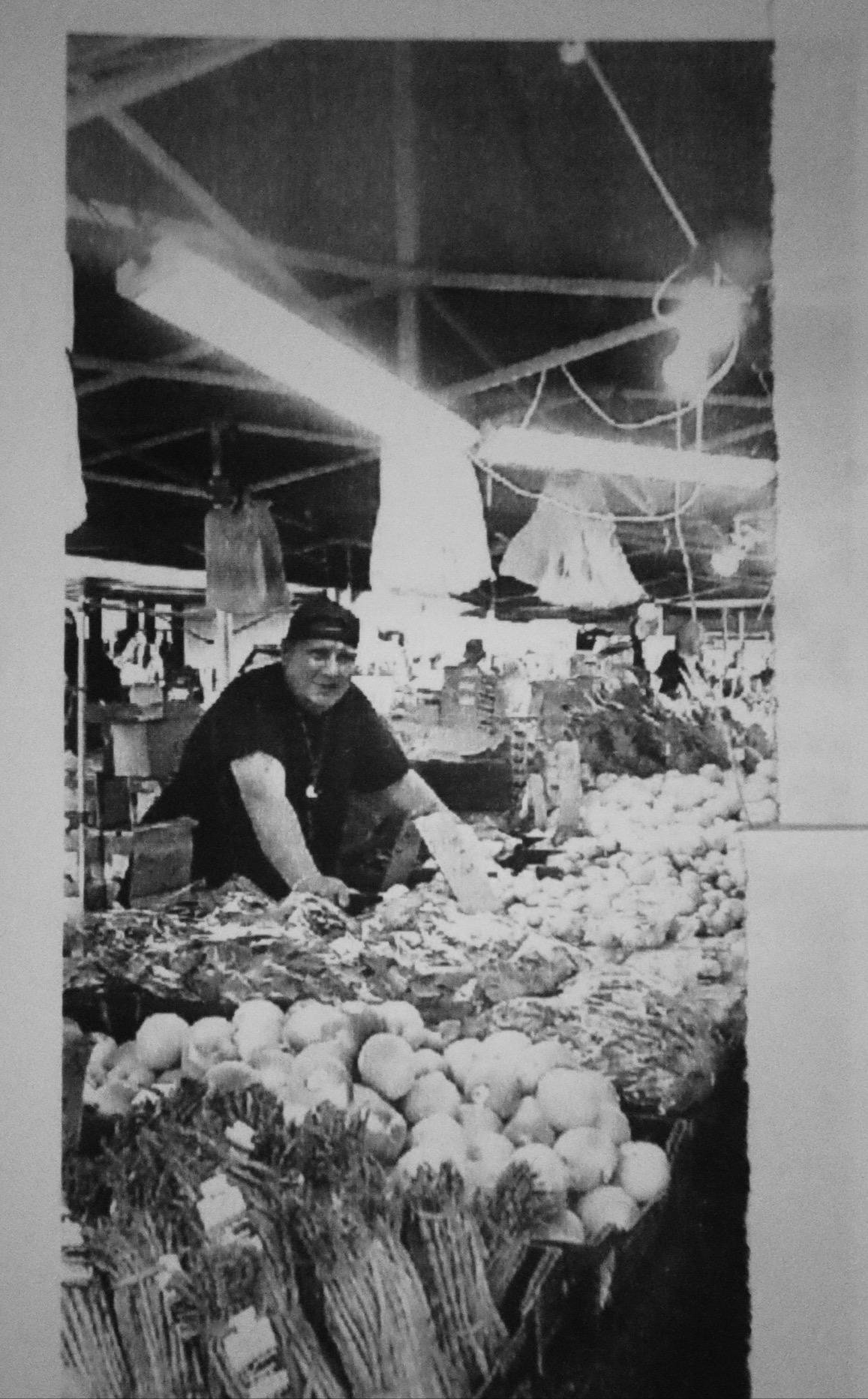
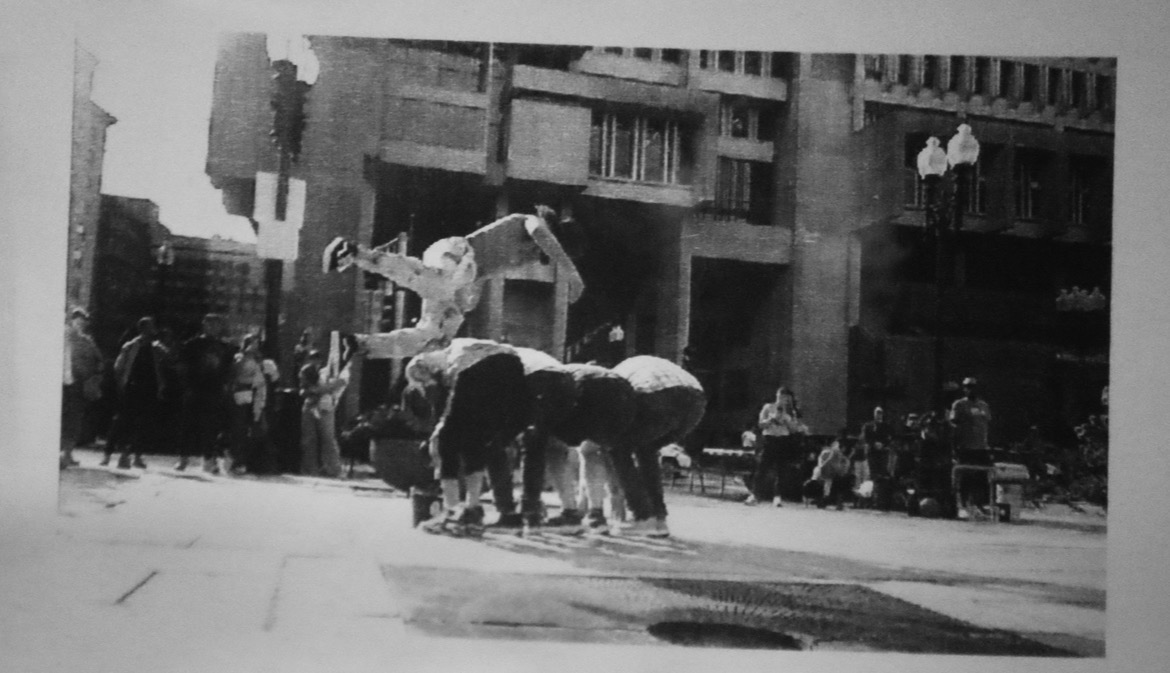
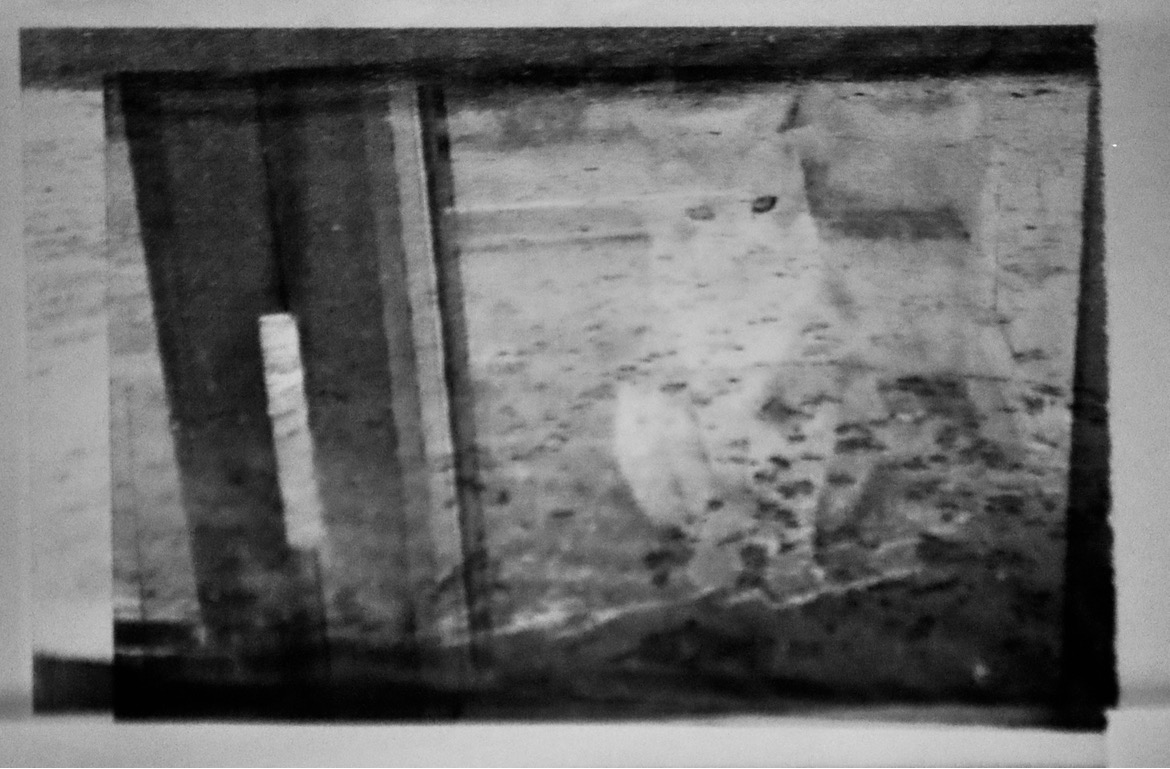
How do I even describe this thing???  Well, I’ve shared a photo of it below.  It’s a little plastic rectangle with a screen on the back that using thermal printing to print out pictures on receipt paper.  The front of it is the face of a panda with one decorative eye and the other a lens eye.  The pictures come out of the “mouth” of the panda.  I added a handle bars mustache for the fun of it.  I had thought about getting a Polaroid or a kid’s camera for a while.  As I stared at the Kidmaneto, I could only think of one thing.  This is my Lomo, reincarnated.  Even though the Lomo is not dead.  My Lomo has returned to me.
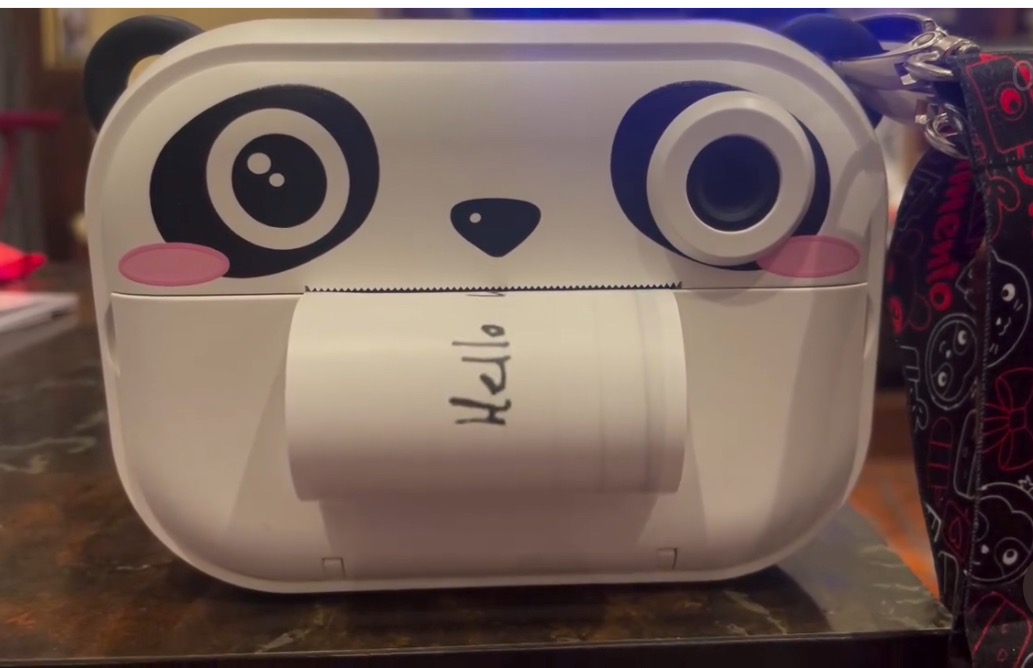
My discovery of getting this camera was kinda funny.  I went through my birthday gift and saw this box that was in brown paper.  Just brown paper.  There was no name on it.  I finally figured out that it was a new but dear friend from church who had given it to me.  Somehow the guy knew exactly what I needed, camera wise.

Staring at the camera, I knew immediately what I wanted to do with it.  What if I took this camera and I used the same rules of composition and photography but to this little plastic rectangle with a panda for a face.  Further, wouldn’t it be fun to drag it to the ends of the earth, like I’ve done with my cameras for past 30 years???  What if I did shoot the Eiffel Tower with this thing one day.  Kidamento goes to Paris!!!  All of these ideas started flowing into my head.  And it was fortuitous, because I had just received some bad news.  Like always, photography was my safety net.  

I had also always wanted to do collages and the Kidamento has gotten me into that.  I’ve also always wanted to try animation, but simple, low fi animation.  I know now that you can have the most advanced, cleanest, most beautiful animation ever but what about if you used paper and glued it to a pad and manipulated it by hand??  I haven’t done it yet, but it’s in the hopper.

Oh and the trapped in amber aspect.  Well, that’s there too.  Lomo trapped everything in a golden amber, but Kidamento traps things in this miniature black and white world.  The prints look like something that might come out of a copy machine.  To my eye though, my first impression when I started printing off the Kidamento was that the prints reminded me of these little films I had seen that Thomas Edison made over a hundred years ago.  They were the first recorded moving images anyone had ever really seen.  They have this opening up of a magical box kind of feel to them.  That’s the feeling I wanted to reproduce.  Not trapped in amber this time, but in paper.  In a world of thermal paper, scenes and places that would never be the same again after I had shot them.

Well, that’s the end of the story.  So here are some freshly printed, not even revealed to world yet Kidamento prints.  @Nataliaandherkidamento updates often.  Very, very, very often.

When I was 18, I had the idea that you found freedom by building worlds inside your head — Sandi Tan, Shirkers

Hello 2024. I can’t even believe I just wrote that. George Jetson is somewhere about to be born soon and we still don’t have flying cars or housekeeper robots. Well anyway, those are the New Years jokes out of the way.

As of late, this blog has turned into a kind of journal from my summer journey, Eat Pray Herman, and lest you get worried, my blog reading public, yes, I have another entry cooking from that. I just have to actually finish it. Soon. I promise. I mention Eat Pray Herman here, but it’s not really the focus of the entry, although Herman gets a lot of mentions. 

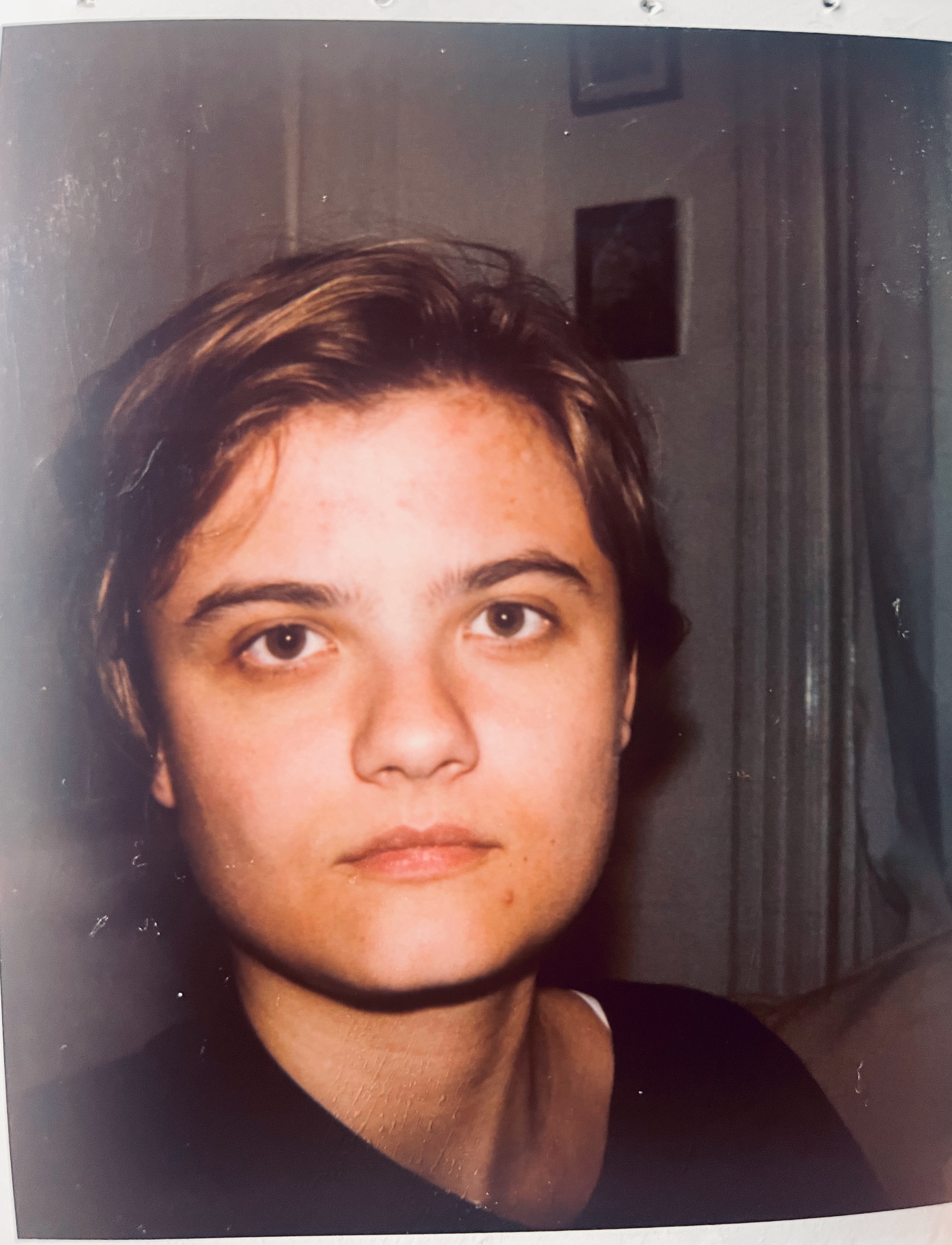
I’ve been at my parents house for an extended visit after the holidays. As you do when you are home, you open drawers and see pictures of yourself from other times in your life, other chapters. Herman passing away also got me thinking about who I was as a younger person. I opened a drawer last night and found this old Polaroid I took of myself when I was 22 or 23 in my first post college apartment, the legendary one with the bars on the windows and the hole in the ceiling:

If you are from Gen-Z this is a proto-selfie. A selfie you could actually hold. 

The picture was probably taken at midnight or there about. I had just gotten home from work, after Herman dropping me off. We probably ate some Klondike bars, definitely got some Five Guys, when that was an establishment with three locations in Northern Virginia and not a place that has restaurants in like Dubai or some place. We’d probably sang a song while we watched some old television show and I got to hear a Herman story about the time he had dinner with Richard Belzer in Baltimore or when he embarrassed himself on Belgian radio when he was 16. 

I think of this now and how funny it all was, but as you can see from the picture, I look really serious. In my mind, I thought somehow that I didn’t measure up, that I wasn’t good enough. 

At the same time though, I remember spending a lot of time on the couch in that place just thinking. I’d usually rent some European epic, black and white with subtitles, something that would keep Little Edie away from the living room. I’d watch those movies and invent these little worlds in my head, most of the time these worlds revolved around pictures I wanted to take or trips I wanted to take. But definitely, more than anything, I would plan photography projects in my head. It was this phase of crazy experimentation for me when it came to photography for me. When I worked for Herman, there was a lot of down time. Herman said he hired me partly because I “brought the party with me.” Now that it’s many years forward, I can say that I spent most of my “down time” researching cameras, photos, photography and things I could do with the camera. It was a mad scientist phase of things. I had all of my camera stuff in the downstairs area in the apartment. I stored my film in my fridge. And I had one obsession — black and white and color infrared film.

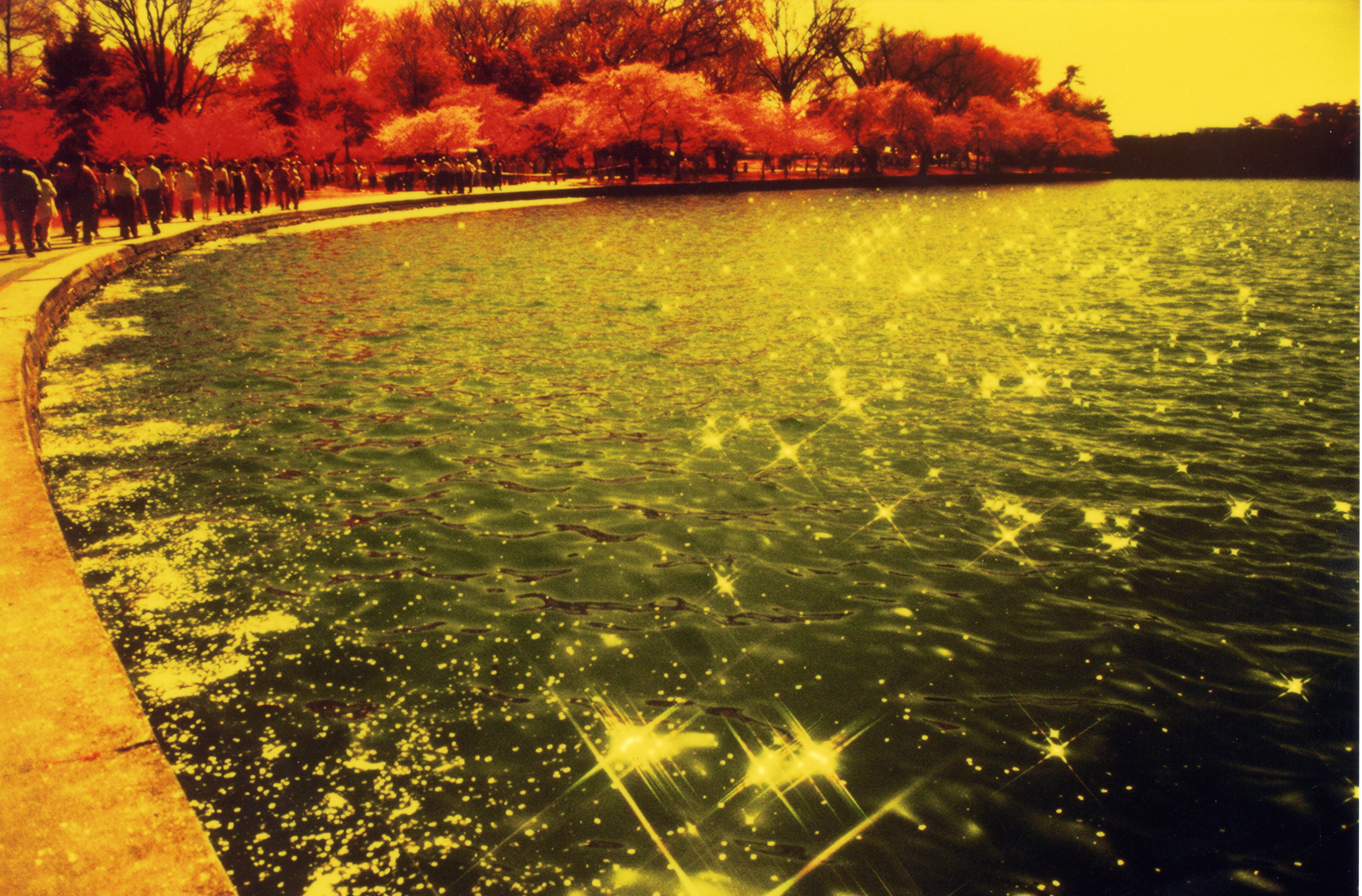
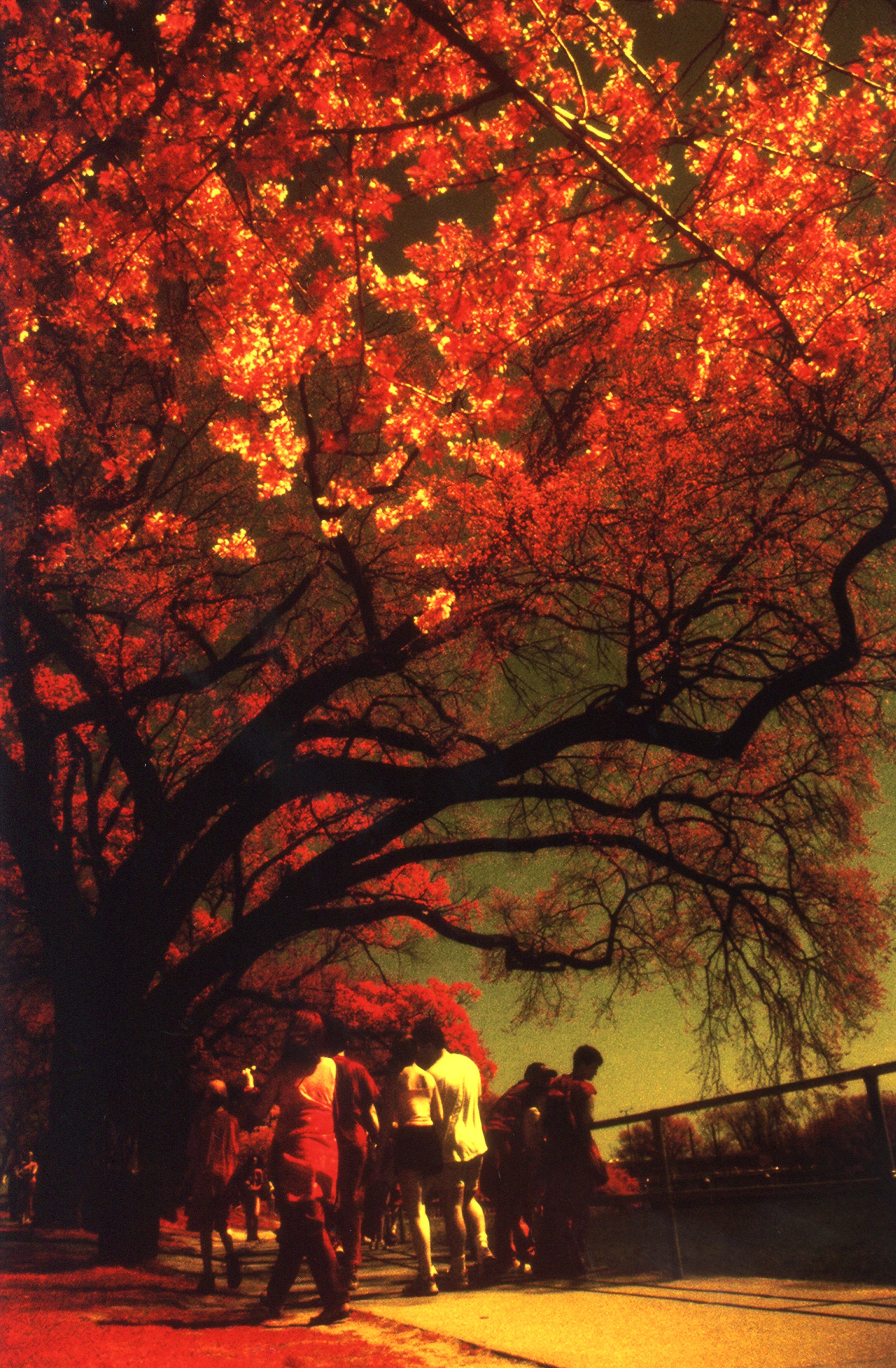
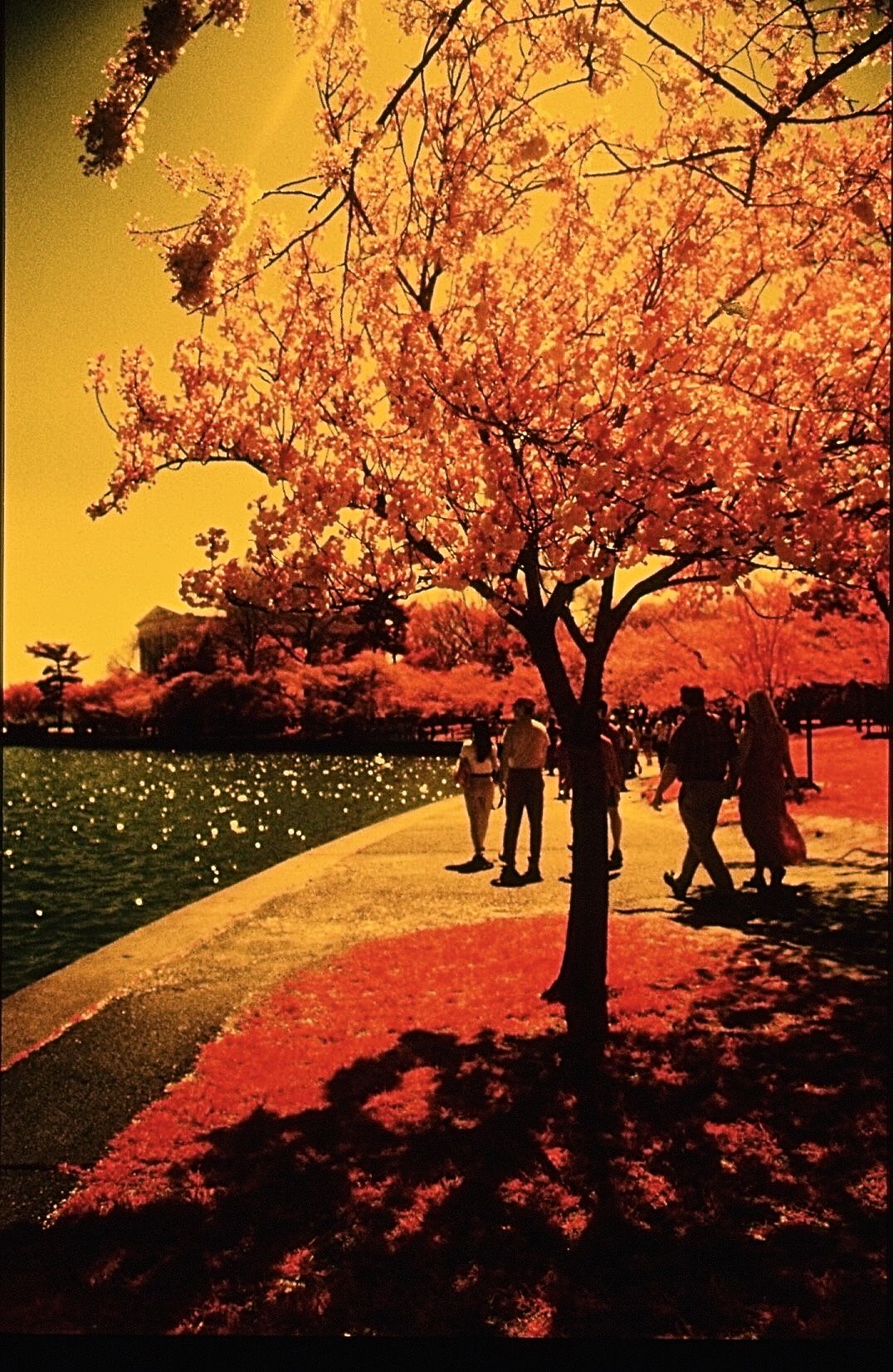
Color infrared film was something I had first come into contact with at college. Shots in my college yearbook were shot with it and the results were insane. Infrared created a world in the camera, in your head that ONLY existed in the camera. There was something so interesting to me. Photography is organizing and enhancing your surroundings. It also meant creating a world in your mind, in your camera and carrying it out. In my mind as well, the work life felt like I had no control over my time and everything was set by someone else and definitely creating worlds in my head or my camera meant freedom. My work was intense and the work hours were, as Herman once said — whenever we tell you to come to whenever we tell you to leave. But on the weekends, I had no constraints. 

I had a distinct plan with the color infrared film, when I got my hands on it. I used to go to a place on Capitol Hill called Asman Photo, where I would get prints made and pick the brains of the people over there. I told someone over there that I was planning to shoot with color infrared film. My idea was to shoot the Washington cherry blossoms with the color infrared film. They gave me the best advice on how to shoot it properly. I had shot the cherry blossoms a year or two earlier, producing a set of pictures that my chief photography critic, my dad, termed “boring.” ”If we always told you you were good at photography, then you never would have gotten good at it,” direct quote from my dad. Love you, mean it!!!! I mean he was right. LOL.

That project with cherry blossoms stuck in my head, sitting on that hand me down couch in the apartment in the background in that Polaroid. I actually had to wait until April, when they bloomed and a hot day to shoot the film. Now shooting color infrared was no joke. Only a Canon AE-1 could shoot it because even by then cameras had sensors in them that would just kill the film. It had to be loaded in the dark and removed in the dark. You need a red filter on the camera and your own light meter. But I wanted to do this, so off I went.

What was produced from that world I created in my head, in my mind are some of the best pictures I have ever taken. And these pictures are truly unique, as they no longer make color infrared film and the cherry blossoms are their own kind of temporary phenomenon, no two blossoms exactly the same. Yes, we’ve gotten to this point and I haven’t posted any pictures yet. Ok, here they are:

I’ve posted these over the years, but this is the full set. I shot 36 pictures of course and these were the best ones. I was still kinda learning photography then and color infrared was an interesting medium, to say the least. This was slide film too and printing color images off of slides was also insanely expensive at the time, something like $5 for a single 4 by 6 print. I made barely $300 a week then and 1/3 of that went to the rent for my palatial Capitol Hill manse. So these slides sat in my parents house for 20 years until the world shut down and we all got fascinated by a tiger enthusiast/zoo owner/polygamist/gubernatorial candidate/inmate from Oklahoma in March 2020. Oh those were the days. Then I finally scanned the pictures. In a way, this is their world premiere.

I did this photography vagabondage for a couple of years. The word “vagabondage” in particular because it comes from another piece of documentary filmmaking I continually come back to and fascinates me endlessly. Ken Burns New York features a part about Philippe Petit, World Trade Center tight rope walker, where he describes the walk as a kind of “vagabondage,” which I mean when talking about hoisting a tight rope between two buildings that were literally a mile up in the sky, well, it applies. My early 20s were my photography vagabondage, always stretching what the film could do. Then, to paraphrase Sandi Tan from Shirkers, I went off to a cold place. She went off to university in England. I went off to a cold place known as international relations graduate school.

Now looking back on all of this years later, what strikes me is that I spent a lot of that time working for Herman wondering about what is next. What should I do? What was my next step? And the paths were so incredibly divergent. I considered applying to art school and maybe getting a masters in photography or graphic design, something I had been tinkering with forever and something I continue to tinker with. Or I could go off to these schools of international relations. Going off and doing art just seemed so unstable, so something that would get me a good job was more favorable. 

I never really talked about up here about my time in graduate school one. One thing that happened was that I gave up the photography vagabondage. Almost everyone I studied with was so serious, i.e. insufferable that the mere notion of me rolling up with my myriad of cameras and jabbering on about color infrared film, red filters, Lomo LCAs and my 1950s Lubitel was not going to get a good reception. The photography vagabondage just stopped cold once I went to that cold place. I don’t think I ever told anyone I went to graduate school with that I was a photographer. It seemed too crazy to even mention. Everyone wanted to be the undersecretary to the assistant secretary for the secretary of the secretary and I wanted to go to Hong Kong, rent a studio for a year and photograph the city 24/7 using my already sizable camera collection. Or maybe a corner apartment on some busy street above a bakery in Paris where I could just photograph what I saw going on below the apartment for a year. I guess becoming Secretary of State would have to be put on the back burner for me.

I remember one time in particular, during that graduate school time, where I read in The Washington Post that Helmut Newton had died. Helmut Newton, subversive portraitist of surrealist scenes featuring half clothed women and German chancellors who looked tree trunks posing next to tree trunks. At the time I was at an undecorated random apartment in North Virginia with my classmates from a class I was taking at the time about post Soviet politics, watching part two of an eight hour “abridged” documentary about the fall of the Soviet Union. My classmates, ranging in ages from 24 to 27, had various comments about the inaccuracies in the documentary. I was there, more interested in reading Helmut Newton’s obituary and dreaming of owning a Hasselblad or a Rolleiflex like the master had photographed with. 

When I think about it now, I clearly remember what the room looked like I was in and reading Helmut Newton’s obituary and the photograph of him that accompanied the obituary, which featured him wearing high heels with his legs elegantly crossed, sitting pool side in Monte Carlo or some other location that was much more glamorous that the sterile Northern Virginia I was in. What I also remember was knowing that it was incredibly irrelevant to my classmates that this master of photography had died. It wasn’t their fault but in hindsight, I realize it was another sign that the degree was probably not for me. I don’t remember exactly what I learned that day in the documentary but I remember that Washington Post article about Helmut Newton. 

I don’t know if this tidbit is relevant to this whole thing or what, but I remember once we were done with the documentary watching, I hung out for a bit. I was meeting up with Herman and we were going to go on some weird Herman-esque adventure like driving to a mall in Maryland to see a movie theater ticket booth modeled after an Egyptian funeral barge. No I’m not kidding. We really did this. But I’m not sure if it was exactly that day. Anyway, I was waiting for Herman to get me and I sat in the kitchen, read that newspaper and chatted with my classmates, whose names escape me now. What struck me was that none of my other classmates even stayed for a second to thank the people for hosting us or to even say goodbye. No part of what we actually learned that day or any of my classmates names stuck with me, but them just all leaving as soon as we were done and nobody even saying goodbye or thank you or anything once the whole thing was done has always stayed with me. I was in a cold place, colder than I even ever imagined.

As one of the pivotal professors I had in the program said to me — we educate bureaucrats here, not poets. In my mind, cold bureaucrats. According to him, Vizzini from Princess Bride in the flesh, I was too much of a free spirit to be there. Photography vagabondage was so far from this frozen world I had found myself in. Certainly it did not belong in the hallowed halls of the international relations degree. Years hence I would realize that sarcastic Vizzini was right about me being a free spirit.

So yes, I put the cameras down for a good five year period and took precious few photos in that time. I can’t recall exactly why I did this. Maybe I didn’t want to be distracted from what I was doing. Maybe I no longer wanted to create worlds in my head anymore. Maybe I knew on some level that I was in a cold place where this type of creative vagabondage was really not appreciated. 

Gradually after I was done with the program, I started taking pictures again, but a quote from Little Edie of Maryland Avenue always stuck in my mind. Lots of people take really good pictures and I wasn’t special in any way. 

I picked the photography back up in 2008, when I got my first digital SLR. By then film was in the rear view mirror, forgotten about completely. Digital was the thing now, Polaroids and finicky film cameras consigned to drawers at my parents house. 

But then the pandemic and my re-entry to film. And here we come to take two at using infrared film. On my first stop on Eat Pray Herman, I went to New York. While in New York, I “had to” to go to B&H. ”Had to.” Now let me explain. I buy my clothes from LL Bean, Good American and Jamaica Plain’s finest thrift store establishments. Yes, t-shirts I am particular about and yes, many of them have Godzilla on them and/or Japanese writing. But overall I am not a shopper. Except for B&H. In there, price tags do not exist. Or I mean I wish they didn’t.

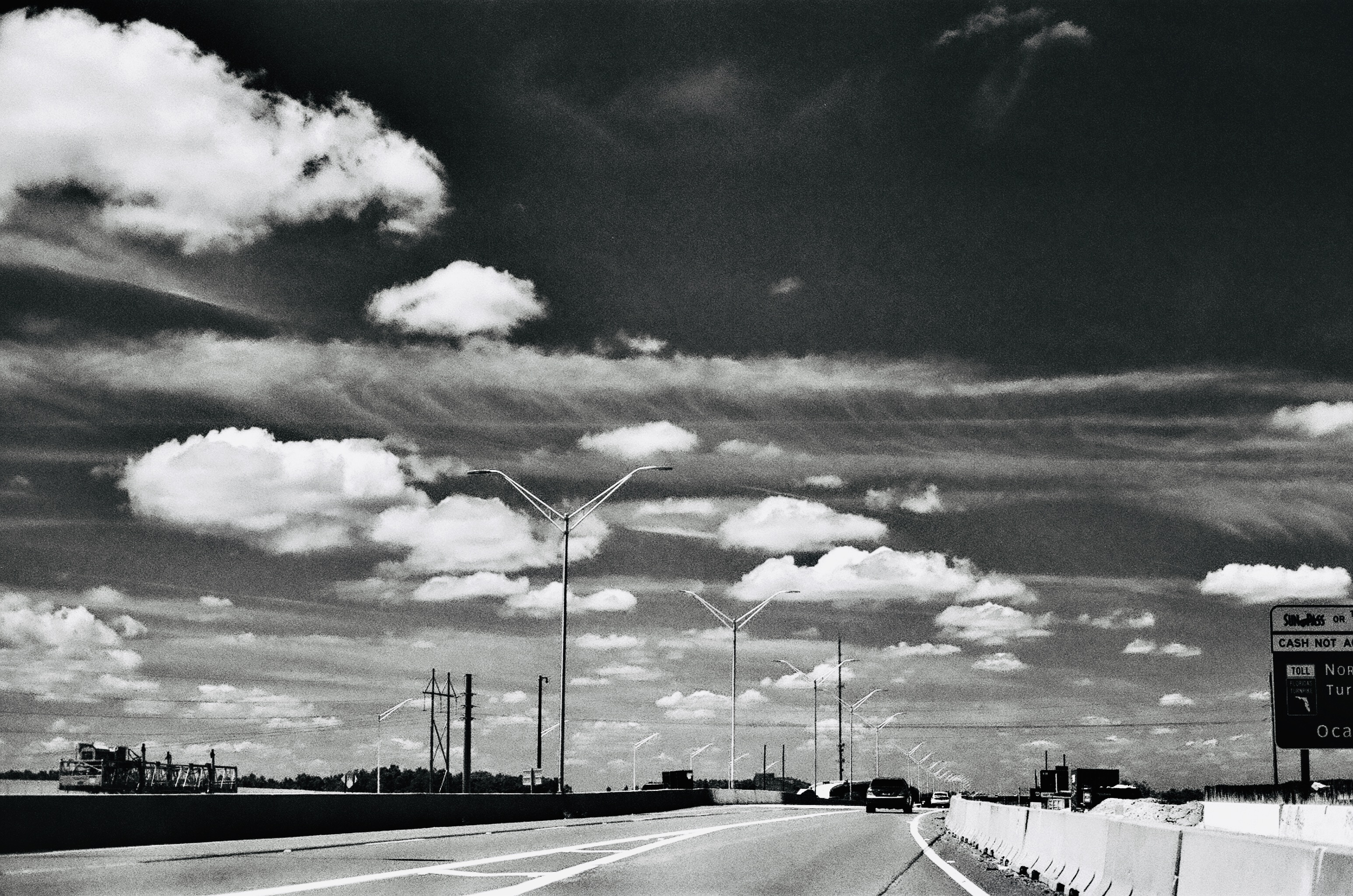
I ostensibly went to buy a couple of rolls of film for the further parts of my trip. While at the film counter, I spotted some black and white infrared film. I thought and thought and thought and decided — I mean why not? There had to be a location that I would use this film in. And handling super light sensitive film through seven flights was going to be SUPER easy, right? 

If by super easy you mean that I had to purchase a red filter for my camera that I had to jerry rig onto the camera with gaffer tape and I had to travel with a dark bag and a SEPARATE lead lined bag to take through the airport scanners, then yes. Traveling with this film was easy.

What could be the perfect location for using extremely heat sensitive film? A place that in August is, as Herman would have put it, hotter than a chili pepper in a polar bear’s ass, Orlando, Florida. So off I went to the sunshine state with my Canon AE-1 especially brought for this purpose, gaffer tape, red filter, dark bag, lead lined bag and ultimate faith that this new vagabondage was going to result in something coming off the camera. Yet again in my head, I created a world. Now the big question was, would this world actually come off the camera? Oh it did. It ABSOLUTELY did.

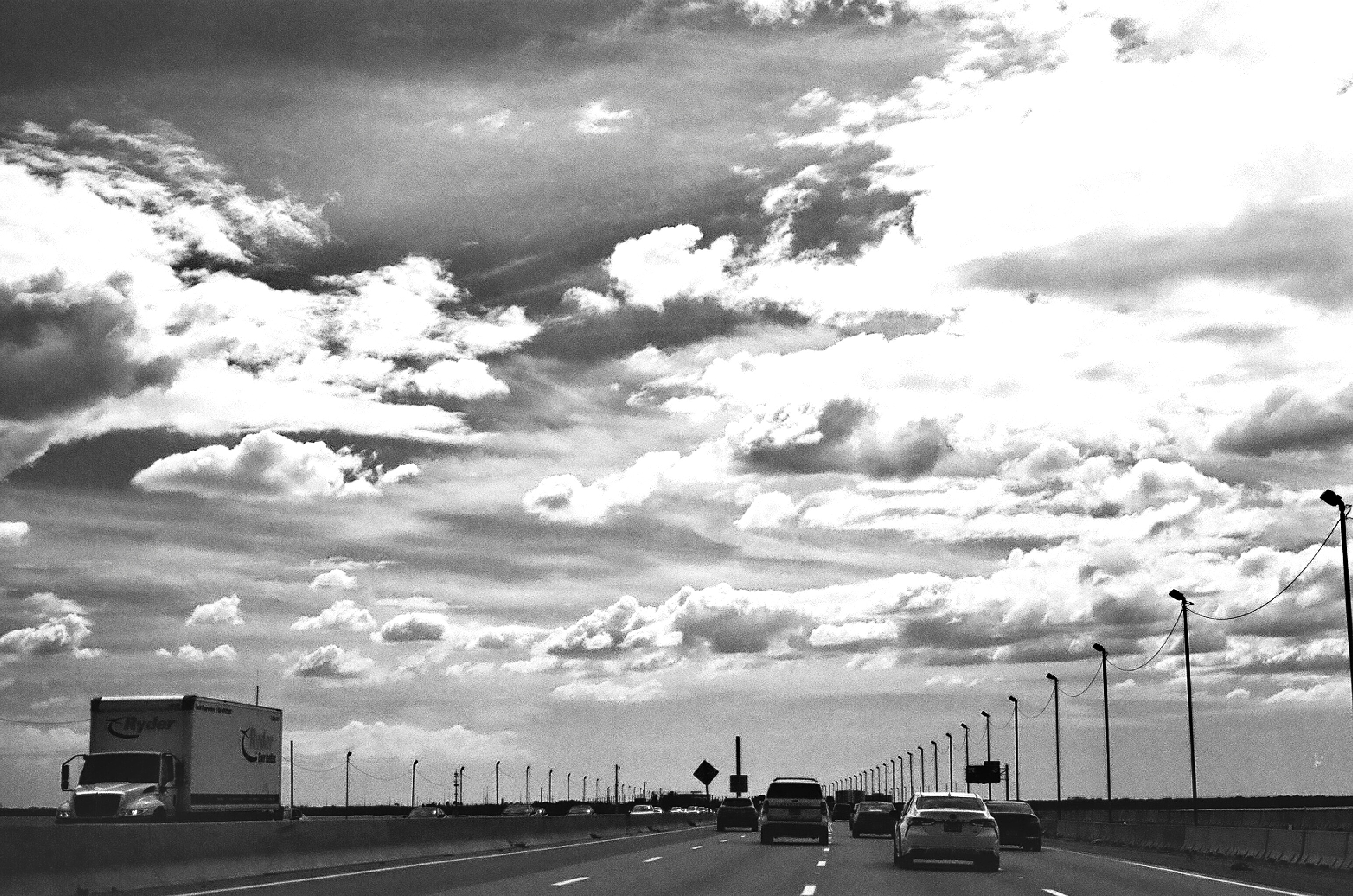
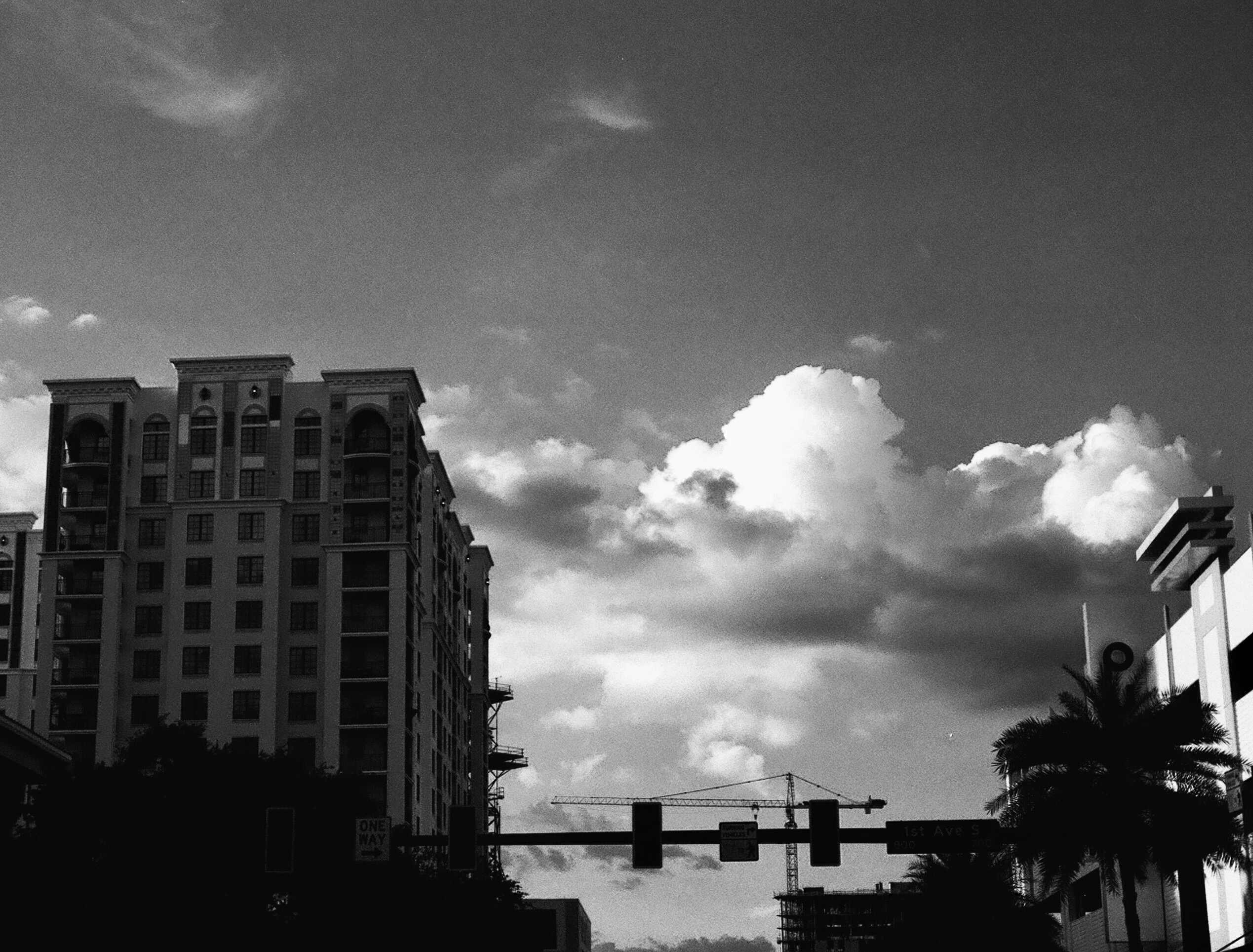
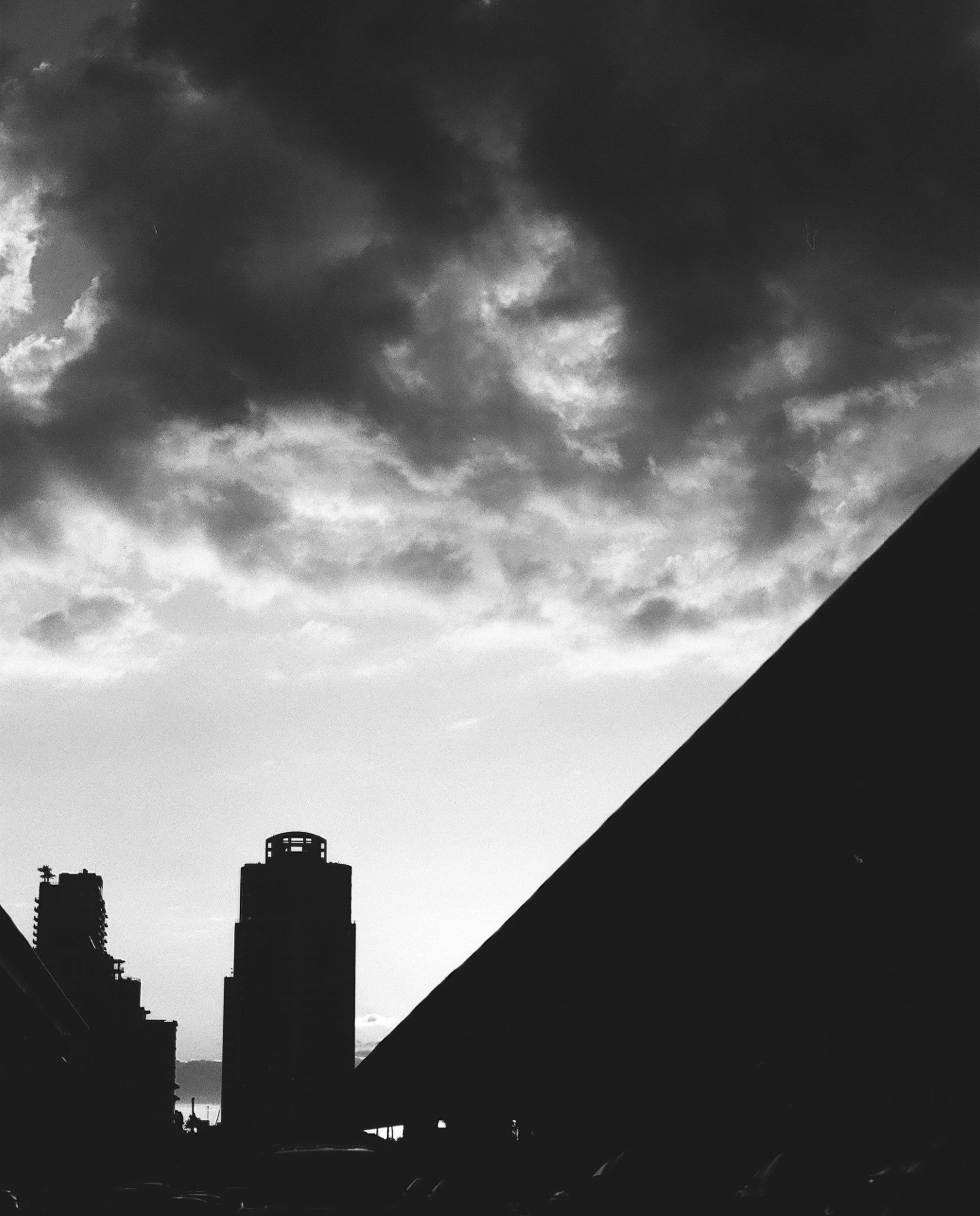
I wondered a few times during Eat Pray Herman why I was taking all of these pictures. When I saw these, I absolutely wondered no more:

Stay hungry, stay stupid, as the creator of the silver magic rectangle I am writing this on said. Persist in your vagabondage. Ignore the Little Edies of the world and for God’s sake, never stop creating worlds in your head. They are the keys to ultimate freedom.